
Air & Fuel Shut-off Valve – Cummins Filtration / DAF Trucks
November 5, 2026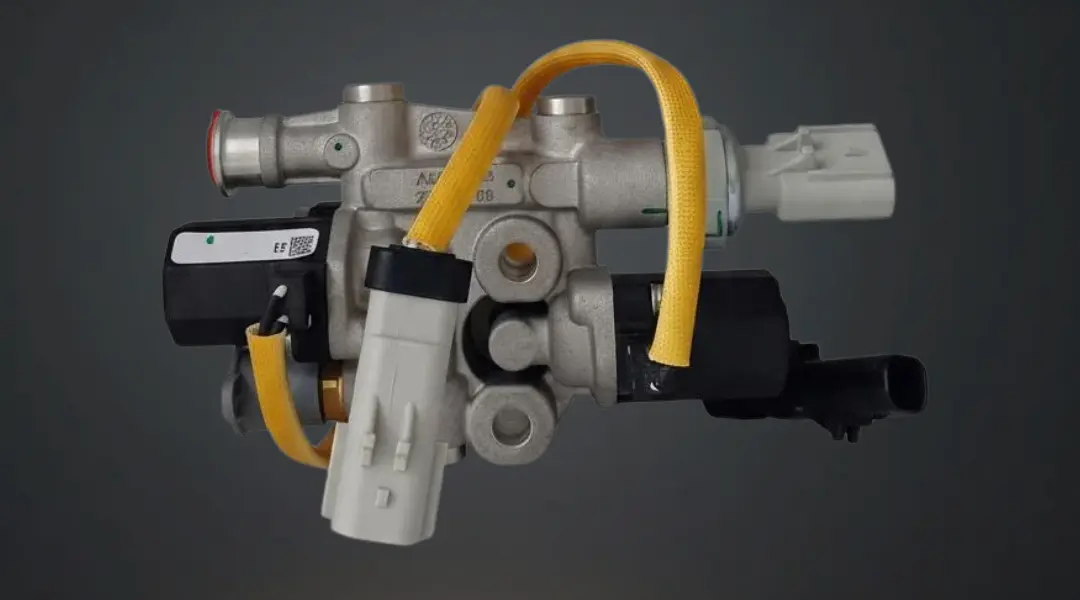
In modern commercial vehicles, emission control and system reliability are critical to vehicle performance. For Cummins Filtration, a key challenge in the fuel module used for Diesel Particulate Filter (DPF) regeneration presented an opportunity to improve component integration, assembly efficiency and overall system cost. Rotex Automation addressed this through an integrated Air & Fuel Shut-off Valve solution.
Valve Application
Air & Fuel Shut-off Valve – Fuel Module in Filtration System
The application involves hydrocarbon dosing for active regeneration of the Diesel Particulate Filter (DPF).
The system is used in the exhaust after-treatment process, with the end-user application identified as DAF Trucks.
The original configuration used two separate valves:
- Fuel Shut-off Valve
- Air Shut-off Valve
Rotex developed a combined valve solution to integrate these two functions into a single design.
Challenges Faced
Cummins Filtration's existing configuration presented opportunities for improvement in component integration, assembly time, reliability and overall system cost.
Multiple Components and Connections
Two separate valves required additional fittings and piping, increasing component complexity.
Longer Assembly Time
The existing configuration required approximately 8 minutes for assembly.
Reliability Improvement
The existing benchmark configuration had comparatively lower reliability.
Higher Overall System Cost
The multiple-component configuration increased assembly and component costs.
The Turning Point: Partnering with Rotex
Rotex Automation developed an integrated Air & Fuel Shut-off Valve solution, combining two separate valve functions into one design.
The objective was to simplify the system architecture, improve reliability and reduce overall costs.
Why Rotex?
Rotex brought an application-focused engineering approach to the challenge, developing an integrated valve design that addressed component complexity, assembly efficiency and system cost.
- Integrated Air and Fuel Shut-off Valve design.
- Reduced fittings and piping requirements.
- Simplified system architecture.
- Improved reliability compared with the benchmark configuration.
- Optimised assembly time and overall system cost.
The Results: Engineering More with Less
The integrated Rotex solution delivered measurable improvements in assembly efficiency, component integration and overall system cost.
| Performance Parameter | Benchmark | Rotex Solution |
|---|---|---|
| Assembly Time | 8 minutes | 4.5 minutes |
| Assembly Time Reduction | – | ~44% |
| Fittings & Piping | More | Reduced |
| Reliability | Lower | Improved |
| Overall Cost | Baseline | 50% Reduction |
50% Overall Cost Reduction
An integrated valve design helped reduce overall system costs while simplifying component integration.
Why This Story Matters
This case demonstrates how Rotex's application engineering and integrated valve design can simplify automotive fuel systems, reduce component complexity and deliver measurable commercial benefits.
It is an example of how functional integration can create value beyond the individual valve component.
- Faster Assembly: Assembly time reduced from 8 to 4.5 minutes.
- Component Optimisation: Reduced fittings and piping requirements.
- Improved Reliability: Enhanced system reliability compared with the benchmark valve configuration.
- Cost Optimisation: 50% reduction in overall system cost.
- Integrated Design: Combined two separate valve functions into one solution.
Your Business Could Be Next
Are multiple components increasing your system cost?
Are assembly complexity and reliability challenges affecting your automotive applications?
Partner with Rotex for integrated valve solutions that improve performance, reliability and cost efficiency.
Contact Rotex Automation